May 14, 2014

Road Trip to Architect, USA

The road to becoming an architect seems the longest at the beginning.  No matter which map you use starting the journey to becoming an architect can be an interesting… hectic… smooth… bumpyride.  I took the scenic route to architecture.  After always having the desire to design I focused on architecture and interiors.  Throughout my graduate studies I became increasingly interested in the social aspects of design, which drove my decision to enter the AmeriCorps program after graduation.  Unsure of how I wanted to start IDP, and unaware of all the details I enrolled and was able to log some hours until I met the limit of hours possible without working under a registered architect.  My AmeriCorps position was with the Habitat for Humanity affiliate in Charlotte, NC.  I spent 2 years working in construction and in community development.  Both task were aspects of architecture, yet not completelyrecognized as IDP hour “worthy”.  Although I loved it, with only about 900 hours of appropriate IDP hours in 2 years, I decided to enter into the traditional process and become an intern.  I am currently working in a small firm under a registered architect so that I can complete my training hours.  After a few months of working, I enrolled in an ARE study class led by the local AIA chapter, which has been helpful to reduce my fear of testing.

As I continue to study on my own I made a plan and timeline for how I want to complete the process.  In talking to colleagues about it, I’ve found that no one has done it the same way, so using a collection of methods to formulate my own gives me solace that I have the freedom to make my own way.  It also gives me nightmares that my way not be the best Although I have not taken any test yet, there are a few things that are making my journey less painful and pushing me to work through the studying and working phase that I am in.

The first one is encouragement.  Every time I open my ARE review manual I am reminded how hard my life is.  While I love to learn, the mere fact of studying for numerous exams for the next 2 years, or more, or maybe less, causes occasional restless nights. Noticing the distant I have yet to travel, I feel as if myM.Arch was a small stepping-stone in the grand scheme of this journey.  Although valuable, the real work begins now.  

Secondly, accountability is very important As an “emerging professional in the architecture industry”, staying liable for my process is arguably the hardest part.  The flexibility or the rolling clock and the freedom of testing times could be a procrastinator’s demise Find a friend to constantly or occasional ask you about your progress, so that you hold responsibility for staying on task.

 Justify the process, why it is in place and why you believe in completing it As my third tip, I think it is important to know why all this is even necessary, and going further to define what it means to you.  Often I walk into large building and think about all the design decisions that have gone into creating the space.  From the huge things down to the smallest details, architects must be well versed in communicating the intent on many levels While I know passing the ARE’s and completing IDP does not make you a great architect, the completion of the process gives you the opportunity to practiceindependently and be respected.  

Forth, which maybe should be first, is being aware of the possibilities and rules.  There are various ways to get IDP hours, outside of working in a traditional setting.  Always be up to date on what NCARB issuggesting Also be aware of the process in the state accreditation board as well, which varies state to state.  The IDP process is intricate.   NCARB has a growing number of resources that are available for interns on the road to licensure.  Take the time to follow all that is available so that you are able to use the information and make your journey less frustrating.

Lastly, remember… You are not alone!  It is always nice to know you are enduring the process amongst many. Someone else in this world is up at 1am reading about construction documents and looking at building sections as well.  Though you may be far apart and probably strangers, it gives me some comfort knowing that there were those before me who have passed; those with me who are pressing toward the official “Architect” title, and those behind me whom I will one day be an example for.  Press On!  

By 

May 6, 2014

Architecture of years past


I got a chance to survey a 1880s landmark residential building in the Soho area of Manhattan. These units were full floors with three exposures. An elevator core & stairwell adjoined the two buildings to one. I briefly snap a few shots as I worked. 


The wood work and iron inlay was detailed and telling of the lavish owners who inhabited the units. (Looks amazingly good for its age. Installed later in the life of the building??) 


I can only imagine the many letters dropped down this chute. Letters of love, business acquisitions or maybe just a simple hello. 


I came across this gem. Most may just say, "it's just a door." This is far more than just a door. This curved door is original to the apartment and served a middle room adjacent to the bedroom. This unique item would be very costly to construct by today's standards. Especially if it were expected to last 130yrs. I was glad to see this entire installation removed whole and relocated within a unit being renovated and modernized at a lower level.  


And lastly there was a pocket door. Simple in theory but not utilized much today though it was and still is a great space saver. A joyous experience as I survey necessary building repairs. 

Signed
Jared W Smith, R.A.

April 22, 2014

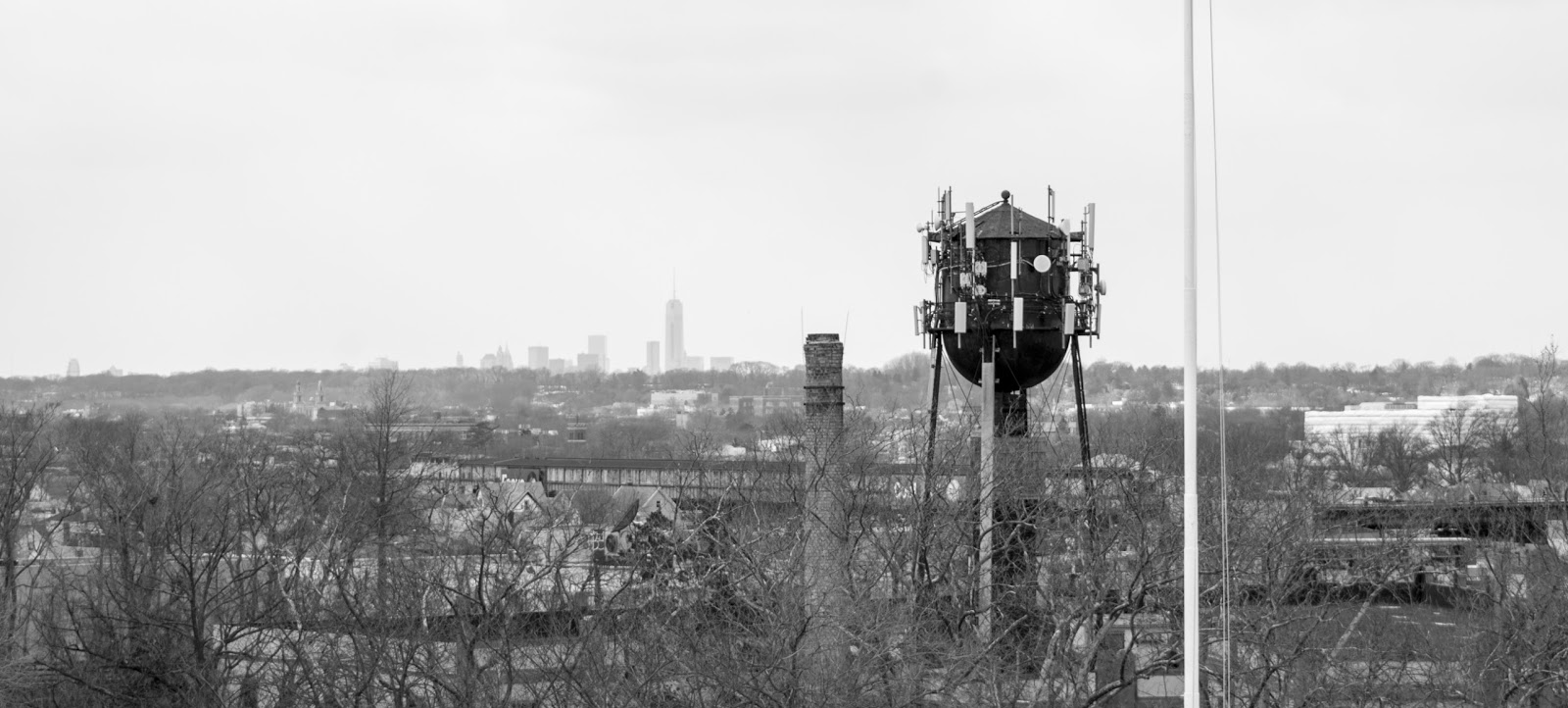
Proximity to Mahattan

http://www.flickr.com/photos/jaywesphotos/12778369273/in/set-72157641325590834
Click photo for Hi-Res - Flickr
Working in and around New York City, I have a way of using Manhattan as point of reference. On rooftops I look for the all too familiar New York Skyline. Sometimes it is large and right in my face and other times it is not and I can barely make it out. BUT it is still there. I have to say I have great pride in the city that I was born and raised in.  

April 16, 2014

Color Selection

http://www.flickr.com/photos/jaywesphotos/12779399903/in/set-72157641325590834
Click photo for Hi-Res - Flickr

Color Selection. A tough task when it comes to presenting possible colors to a owner. In the above photo a prominent landmark building has undergone construction repairs to the exterior. From the public sidewalk the most noticeable change is the brightly painted blue fence. Traditionally these fences were sometimes a very dark grey color but most of the time they are black.  

Lesson Learned: Clients and Architects don't always fully agree. In this case, it is not a life safety issue therefore it is easier to document the issue and move on. Working cohesively with your clients is essential. On to the next fire that needs to be put out!          

Signed
Jared W Smith, R.A.

April 10, 2014

An Essay of my Architectural Journey


Thinking about my journey through architecture, it has been filled with many bumps along the way. I remember after graduation, wondering if this was the right path for me, with the rolling clock in play, job market crash and heavy debt trailing.

It took me nearly three years after graduating with my Bachelors of Architecture to essentially step back into the lifestyle that I always knew I belonged. The biggest struggle that seems to fall into many people’s mind is “is it worth it? All this struggling, all the hard work, can I do something else with my life?”

Three years after contemplating these thoughts, I have completed more than half my ARE’s. I’ve learned that this isn’t a journey any person can tackle alone. Whether it’s the encouragement of those around you who say how proud they are, or peers who are as determined as you to see you and themselves succeed, it takes a lot of love and determination to press on.
There are several factors that continue to resonate in my mind from the day I decided I was ready to test until every exam I apply for.

First, these exams are incredibly difficult and expensive, it seems to be the biggest fear factor in everyone considering to apply. Just remember, nobody is ever 100% ready, there WILL be questions that you could not even guess the answer to.  Be confident in yourself, use the forums, read the guidebooks, ask questions. These are your best tools to prepare yourself.
Second, what order do I take the tests in? Well, that depends, you have to get a basic idea of what each section contains and gauge for yourself what you feel comfortable taking. For me, I chose one I thought would be simple to get a hang of the exam format.

Third, what if I fail? What if the failures don’t meet the rolling clock deadline? Simple answer that I’ve received, most people fail. Pick yourself up, dust yourself off.  This goes back to “what order do I test in?” I decided to start off easy, with Site Planning and Design, and continued with what I thought had significant overlap. I also chose to test what I considered most difficult, saving what I was comfortable with toward the end to justify the 6 month wait between retesting periods.

Finally, School meant nothing. That’s right, I could have bought the books and studied for this test and felt as prepared or unprepared as I do now. School teaches us how to be designers, to be creative. These tests in my opinion test you on how to test. Sure there is some basic knowledge and experienced based questions, but I find most people struggle on the way these darn tests are worded. NCARB tends to screw with you. Many people have had complaints about their procedures, the difficulties in speaking to a live person about what they screwed up on and what other way they’ve chosen to screw us interns over with. I have my personal gripes with NCARB, constantly changing their rules and costing thousands of dollars throughout this internship experience in one form or another.  As many people have said, their testing standards today do not gauge a persons’ ability to successfully practice architecture, and yet, they are the national standard for what we are to prepare for. I believe many things I have learned in preparation for the exams are invaluable to life as an architect. However, their merit for the exam can be laughable.

In the end, I cannot tell you how you should study, or even if it is a path you would want to partake. This decision is yours. I chose to take an exam once per month which many would advise against, however, I have been able to study at a pace of 30 hours per week. I felt the information was fresh in my mind each time I stepped into the exam room. With SPD, CDs, PPP and Structures out of the way, I see the light at the end of my tunnel. These exams aren’t the most difficult thing you will encounter in your future practice of architecture, they are a hurdle that inducts us into a society. For me, after walking away from this profession, I discovered that it was what I want in life, a discovery that reinvigorated my desire to complete the ARE. All I can really say to you is: "Good Luck on your journey. Keep fighting."

Signed
Ron Kunateerachadalai