Showing posts with label Urban. Show all posts

December 2, 2014

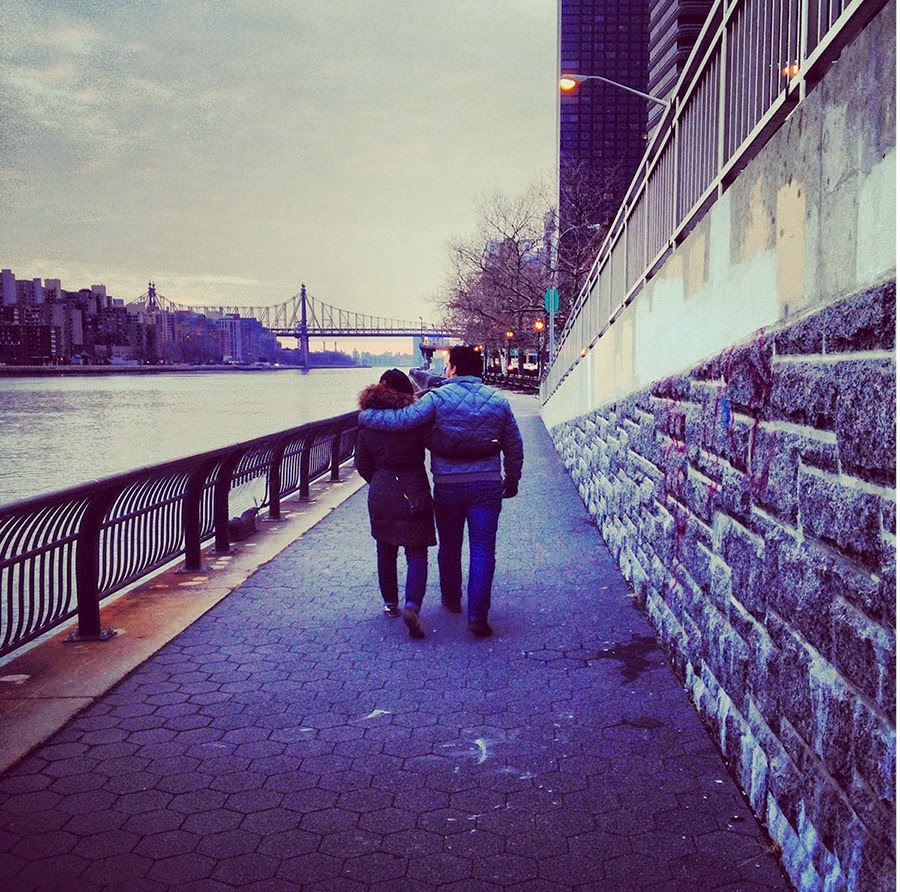
Instagram, Architecture & Photography

I recently entered the world of Instagram, a little apprehensive but open minded. It's been almost a month and I can say for sure: there are a lot of people on there! I'd be happy if you'd follow me @RegisteredArchitect.

Amazing to see the exchange of those with a love of creative expression. My initial reaction to be interested in the expected architecture related post but that has crossed over to art and general non-architectural Photography. The following is phrases as well as lessons learned from my journey trickled with some of my recent post. Mind you I am a self taught Photography still learning my way around this complex world. 


It is fairy easy to capture a photo on a cell phone, use a filter and post it.


The manner in which you go about capturing that photo is what will differentiate a good from a great instagramer.


Framing and composition is just as important as the subject matter being shot.


Apparently likes and followers can be bought and sold.


There are some extremely talented people on Instagram.


Exchanging of photos from all over the world in real time is pretty awesome.


I am more likely to be drawn to a perfectly composed photo of an iconic building or a hand drawn sketch than the other nonsensical things posted.  


Though started with mainly iPhone photos, I will gradually incorporate my DSLR photos also.


I am in agreement with those that feel the average person's snapshots in Instagram aren't 'real' Photography but there are some exceptions to the rule.


With little control over my iPhone's camera, at times I cannot capture the photo the way I want.


I would rather achieve 1,000 real followers than 10,000 fake followers. 


Instagram makes you think about your surroundings more.


There's a whole host of useless users, in my opinion, on Instagram just like other social media.


Architecture is not always about just seeing the whole building or project but also its details that make it interesting. 


Facebook and Instagram have a different mix of people that frequent them. 


One thing's for sure, I wish I had joined years ago!


Instagram is addicting with so much to explore. 


I love photography almost as much as architecture. This feeds my passion and inspires!  


I shoot exclusively with my iPhone 6 and my Pentax k5 & kr bodies coupled with several lenses. Being a hobbyist photographer I do not shoot (my DSLR) ever day or even every week but it is never far from my mind & hand. With Instagram it has encouraged me to seek out opportunities with my mobile and DSLR to capture good moments in time. I hope to improve my skills and gain genuinely interested followers.


There is much more to come in the future. You can check me out on Facebook at Facebook.com/RARegisteredArchitect and on Instagram at Instagram.com/RegisteredArchitect. 

By 

November 6, 2014

Restoration & Architecture - Part One


http://www.flickr.com/photos/jaywesphotos/12683519844/
Click image for Hi-Res - Flickr

Leaving college was an unforgettable time for me just like the vast majority of students around May & June of each year. It comprised a combination of emotions. I was proud to have successfully completed architecture school but also bewildered and nervous about what would happen next. Unless I intended on going the route of teaching, there would be no more summers off. And loan payback was right around the corner.  

The confusion only get deeper and more complex with the various types of architecture available to enter. I was under the impression high end new buildings was for me. In addition to that, my firm had to be within Manhattan. No other types or locations would work. I was determined this was the path God was leading me. Or maybe I was just determined...

Closely following the completion of my degree, I was faced with downsizing. The firm which I had interned was not going to be able to take me on as full time staff. It was the knife through my heart at the peak of my enthusiastic emergence into the real world. I had grown to enjoy going into work. Both the senior and junior staff were inspirational and understanding of my limited experiences. Some of them became mentors to me during and after my employment there. I stayed on part-time, prepped my documents accordingly and set out with my head high to find something else.   

Before long I had sent out countless resumes and contacted several of the big name firms throughout NYC. Then the not so big names. Then the small firms. Then it was any firm that practiced architecture. This was 2008, the cusp of the downward turn of the economy as a whole. Being eager to learn coupled with plenty of firm experience I was optimistic. Ultimately my interning didn't account for much. Those seeking entry level designers requested they have some experience. An oxymoron of sorts. 

My whole family started to aid in my job search. Basically just keeping their eye open for opportunities. At this point I was even reluctantly looking into a few Westchester County firms. One day like any others, my father gives me a newspaper clipping for a firm that was ironically very very close to my family's home (at the time). Though I remember little of who I had spoke with, I had attempted to intern there during college but was unsuccessful. My enthusiasm was not very high but I figured it was worth a try. I was called almost immediately for an interview which was promising. I researched the company and prepared for the interview. I was grateful for the opportunity and would do my best.  

The interview went very well and I was offered the position the very next day. Having some experiences which paralleled their worked seemed to helped seal the deal. I thought to myself- Restoration? What will I be doing, really? I'm interested in modern new buildings not "old" ones. Or am I? Having an open mind, I thought this was a great opportunity to expand my background. Plus I'd have an incredibly short commute, so I gladly accepted. 

Restoration architecture as I've experienced is heavily weighted on building/site maintenance and preventative investigations. All buildings require maintenance at some point after they're built. The better and more proactive an owner is, the easier and less costly the repairs will be. This avenue is intertwined with several mandatory inspections such as local law 11 or as newly named- facade inspection safety program (FISP). This mandates facades, roofs and balconies be inspected periodically. This safe guards the public from deterioration not seen or noticed by said owner. Restoration is not set to the exterior alone. Interiors require updating coupled with necessary repairs to building infrastructure. In addition when infiltration does occurs, following its remedy, the interior finishes may need to be renewed. As defined by most, architects are problem solvers. This is one avenue that benefits greatly from this skill. 

Preservation and Rehabilitation throws a historical aspect into the mix. Knowledge and experience which comes in handy when working in such a old city such as New York City. Though old world construction is usually more durable, rigid and long lasting, problems will still arise. Leaks happen, deterioration causes cracking, spalling, etc. The trick is repairing in a fashion that retains the historic fabric, keeping the appearance (look, feel, color, texture, size) the same. At times it is very difficult, especially if the item is no longer made or isn't manufactured in the same fashion. Architects are researchers of materials, fabrication methods and so much more. 

In Part Two I will talk about my responsibilities working on restoration type architecture as well as the benefits of working in a small group/firm. Did my opinion change of old vs new!?

By 
Jared W. Smith, R.A. 


July 2, 2014

The City is My Living Room

Like many urbanites starting out in New York, I rent a small studio that can fit a bed, a desk, a bike and a kitchen fit for one person. My laundry room is down the block and my pantry is on the opposite street corner. I have a library in the East Village and a gym in Midtown. The city is my living room and the streets between my activities are corridors with windows into other private realms. A vast proportion of the urban fabric is a transient space. The forces that shaped these spaces – namely, the trajectory of the automobile - are becoming less influential and a new spatial network is emerging at a rapid pace. In the overlap with my neighbor and my own distributed dwelling patterns, there could exist radical new living spaces for a generation of people enjoying people (on a budget). 

Envision an innovative spatial network and new kind of housing called Bitroom. This 
decentralized concept of living has many spaces that can be dispersed in the city based on activity and interaction. The idea proposes a series of open-source environments that are influenced by many users and offer temporary benefit to the individual. In this model, the core dwelling functions like sleeping and washing remain private spaces with a permanent address (where soap is delivered), but all other Bitrooms are made available collectively by the network. 

Think of Bitroom as a dynamic peer-to-peer exchange of living space on a daily timeframe. 
Imagine having a drawing studio downtown, a gaming room on the west side, or a BYOB lounge in Brooklyn. The cost to have all of these rooms in one Manhattan dwelling would be so excessive and eliminate social pollination in an age when collecting attention has come to be valued over privacy. These circumstances point to a new common territory for the urban demographic that operate between couch surfing and time-share ownership. Through Bitroom, the apparatus of ownership is questioned and space assumes its own value as a trading device in the system. 

Semi-public urban amenities like cafes, bars, and theaters require financial exchange in order to engage with these shared environments; one must make a monetary contribution by buying a coffee, a beer or ticket. This financial obligation sets up an economic barrier for the expansion of living beyond the private realm. The decoupling of spaces for trading (retail) from the trading of spaces (living) has the potential to transform the physical city. This would require spaces to be carved out of the city in existing buildings or reclaiming the public right-of-way. 

The terms of operation could be modeled after a distributed consensus system in which the 
rooms are open and free for all users willing to partake. Bitrooms could be accessed through a mining process that unpacks access to them from the urban block. This idea of “mining” creates the equivalent of a competitive lottery that prevents any individual from monopolizing one space and cultivates vested users. Rather than exchanging money, an exchange of space itself occurs through a virtual “check-in” to one room, which releases the unused blocks back into the network for others to access. A maximum occupancy is set for each room and as this limit is reached other rooms become active. Over time, a high demand for Bitrooms triggers further mining, until a robust web populates the urban fabric. 

A spatial network like this proposition may take shape in underused pieces of primary urban 
localities. The off-street parking space has often eluded urban usefulness in a post automobile-centric era but has been reimagined on the West Coast. The “Parklet” program repurposes this zone into open public space sponsored by neighboring businesses. It is a remarkable mechanism of increasing communal space accessible to all while reflecting the diversity of those who modify it. This remarkable concept has taken leaps and bounds on implementing shared resources, however it stays at the level of the streetscape. The idea of Bitroom could introduce common territories beyond the urban park or plaza by responding to a new architectural typology that provokes the role of the city and the shrinking dimensions of urban housing.

 The future city will increasingly demand newcomers like me to pay more for less private space. The trade-off is proximity to cultural conveniences but that also costs more money. This trend, combined with the de-emphasis on privacy in the era of status updates and geo-located check-ins, sets up a structure for a new kind of housing. The inefficiencies built into the urban fabric are leftover from organizing principals of past regimes. Bitroom is an ideal living configuration that changes with the days of the week and each user puts a personal stamp on the environment. Basic human needs anchor dwellers to a bed at night but every movement in between could reshape the environment. When I think of the city as a living room, my frame of mind shifts and I no longer see a separation of architectural objects but rather an occupation of connected space. Emerging living formations require a radical adaptation of the physical city where shareholding materializes through decentralized spatial assets.

By
Rosannah Sandoval, R.A.